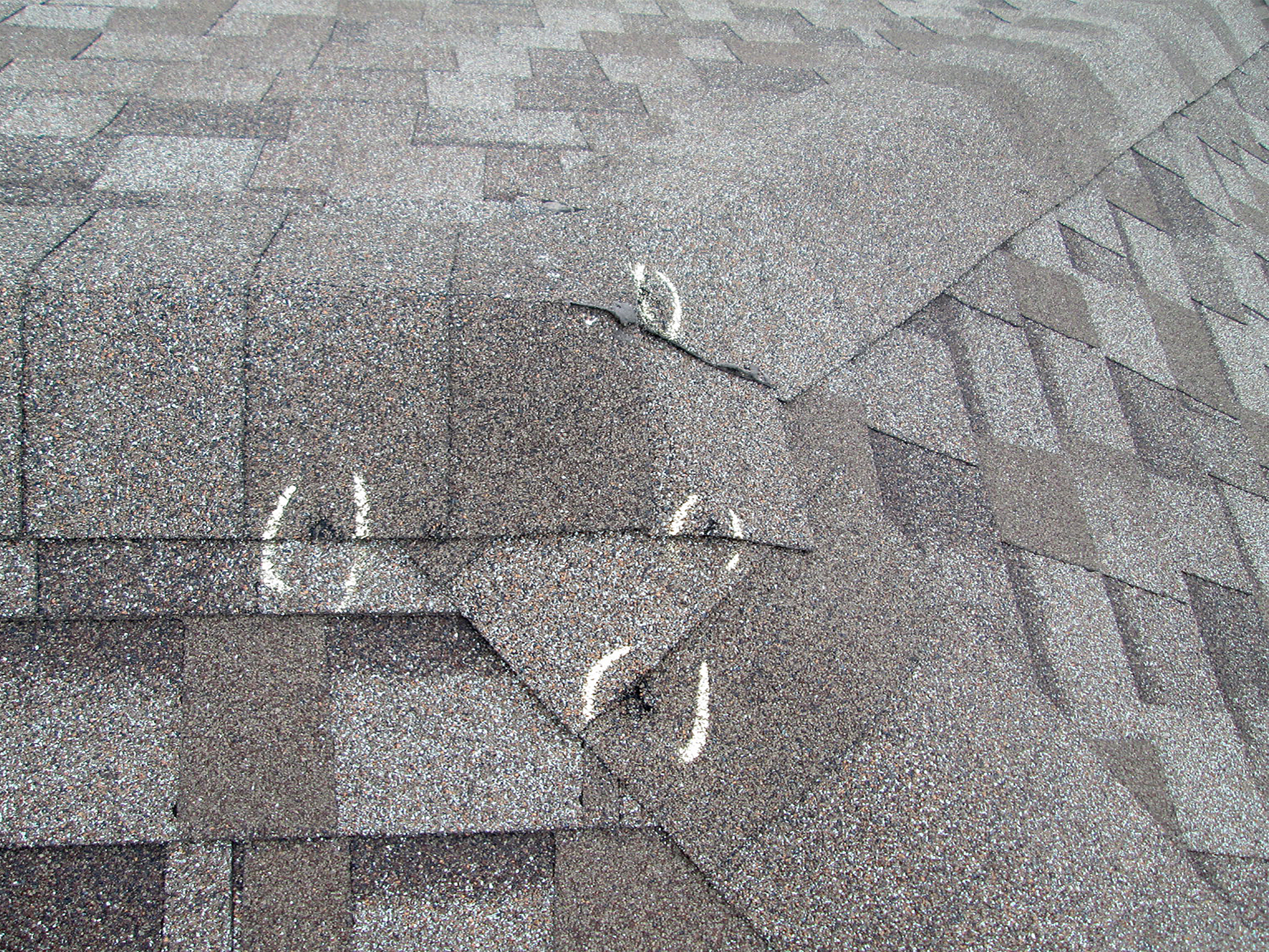
Hail rarely limits its damage to shingles alone. A single storm can compromise several parts of your roof at once, and some of those spots are easy to overlook if you're only scanning from the ground. Knowing where to look helps you understand why a complete inspection matters after any significant storm.
- Asphalt shingles: Hail knocks granules loose, leaving bare patches that expose the underlying material to sun and rain. Even shingles that look intact may be bruised beneath the surface, which shortens their remaining life and makes future leaks more likely.
- Flashing around chimneys and vents: Metal flashing is vulnerable to hail impact and can crack, lift, or separate from the roof surface. Once flashing fails, wind-driven rain has a direct path into the structure below.
- Roof penetrations: Vents, pipe boots, and other openings are common weak points after a storm. Hail can crack seals and shift materials just enough to allow water in without leaving obvious visible damage.
- Gutters and drip edge: Dents and debris buildup in gutters after hail can restrict drainage and push water back toward the roofline, creating conditions that lead to leaks over time.
Catching damage across all of these areas early means repairs stay focused and manageable before temperature changes and the next round of spring storms have a chance to make things worse.
Shingle-by-Shingle Replacement with Matched Materials
When individual shingles are bruised, cracked, or stripped of granules, we replace them in targeted sections rather than defaulting to a full roof tear-off. We match replacement shingles as closely as possible to your existing roof so the repair blends in and your home's appearance holds up.
Flashing Resealing and Spot Replacement
Where hail or wind-driven rain has lifted, cracked, or separated flashing around chimneys, vents, or roof edges, we reseal or replace the affected sections using materials suited for the temperature swings common in southern Ohio winters and summers. Tight flashing is one of the most effective ways to keep leaks from developing after the storm has passed.
Pipe Boot and Vent Seal Repair
Rubber pipe boots and vent seals are often cracked or shifted by hail impact, and because they sit low on most people's priority list, they tend to go unrepaired until a leak shows up. We address these penetrations directly, so water has no path through the smaller details of your roof.
Granule Loss Treatment and Surface Stabilization
When hail removes granules from asphalt shingles, the exposed material underneath ages faster and becomes more brittle heading into the next season of heavy rain and temperature changes. Addressing granule loss as part of the repair, rather than treating it as a cosmetic issue, helps protect your remaining shingles and extends the overall life of your roof.